

How is olive oil made?
How is olive oil produced? The elaboration of olive oil has consisted since the age of three basic operations: grinding, pressing and decanting. The process of making EVOO takes place in the oil mill, the oil mill. And, indeed, this word comes from the Hispanic Arabic “alma‘ṣára”. In this article we move to the olive fields and to the oil mills to discover how extra virgin olive oil is made, will you accompany us?
As a curiosity, our Beloleum oils They are made in the family mill of Belchite (Aragón), dating from 1879 and which is located right next to the old town.

How is olive oil made? ELABORATION PROCESS
At present, the techniques have evolved, but, in the case of extra virgin olive oil, the result remains the same: 100% olive juice. The most important phases to obtain liquid gold are summarized in:
- Collection, washing and storage.
- grinding and smoothie.
- extraction.
- storage, filtered and packaging.
Next, let’s see how the oil is produced step by step:
1. Collection
The olive trees bloom in spring and, from this moment on, the olives begin to ripen to their optimum point for collection, acquiring a darker color each time.
In the case of the traditional Empeltre variety, the maturation of its fruits begins in the first week of October. It is then that there is the greatest transfer in our olive fields, located in Campo de Belchite.
Olives can be collected in different ways:
- milking: Traditional way of collecting the olives one by one, keeping them in a basket.
- VAREO: It consists of hitting with a rod so that the fruit falls from the olive tree.
- Vibration: Machinery is used to make the branch and trunk vibrate.

2. Transport to the mill
After field collection, olives are transported to the mill in trailers.

3. Wash
After receiving the olive in the oil mill, the cleaning phase begins, which consists of removing the leaves, the pieces of branches or the small stones that have been able to accompany the collection. The olives are submerged in a stream of water, where they float, leaving the heaviest materials at the bottom.

4. Grinding and smoothie
Grinding consists of crushing the fruit to get the olive paste. This paste is sent to the mixing machine where it is continuously removed with blades to get the oil and water emulsion to break. The result is a much more homogeneous substance.

5. Extraction
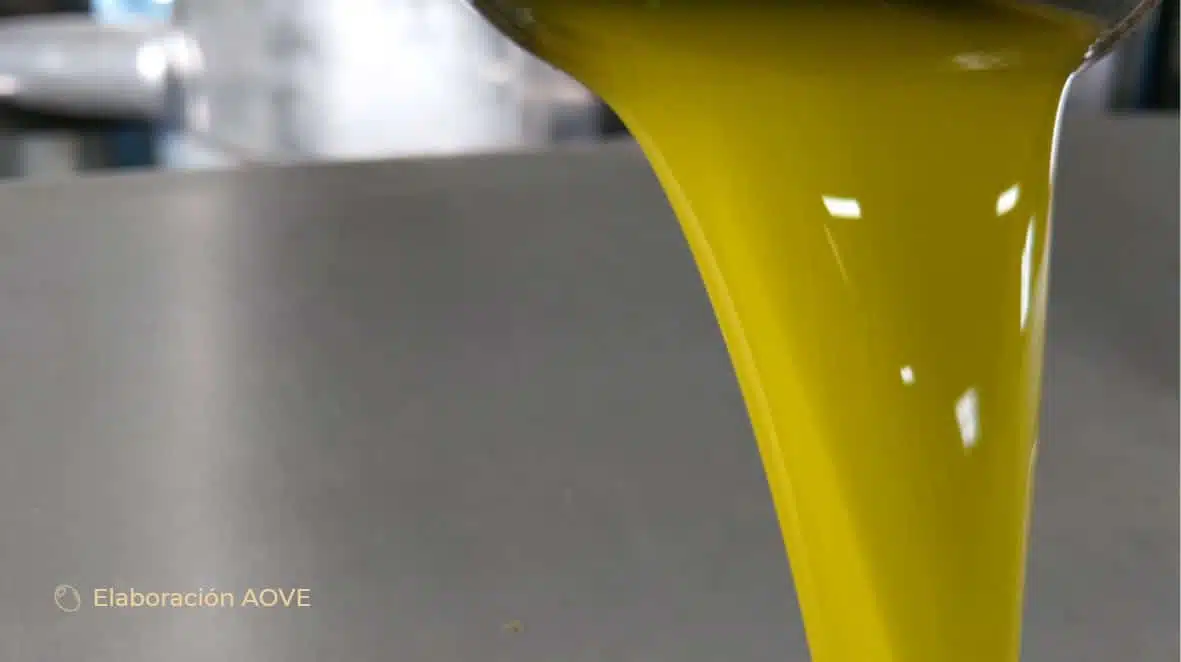
The traditional system works by pressure, although today most of the mills use the continuous system in the production of olive oil. It consists of fluidizing the paste by adding water (sometimes of vegetation), and then separating in the vertical centrifuge the oil from the water and the pulp and the bone that still remained.

6. Storage
Olive oil is ready to be stored in the tanks, places well protected from light that must maintain temperatures between 15 and 18ºC so that the oil maintains its optimal quality. The oil is stored in silos inside the mill:

7. Packaging
The last step is the packaging for marketing. Before this process, extra virgin olive oil is usually subjected to a filtrate, unless you want to obtain oil in the branches. The most used materials for bottles are glass and plastic.
At Beloleum we have chosen the opaque glass for our extra virgin olive oil. On the label, of different colors depending on the variety, the profile of the old town of Belchite appears, which also imprints its personality on our oils.

And so far the process of making extra virgin olive oil! All that is missing is the arrival to the table of our consumers and… enjoy! If you wonder where you can buy our premium Aragon oils, follow the Link to our store To discover our three specialties: IMPLERT, , Arbequina and selection (coupage of these two varieties).
Latest Posts on Olive Oil

Fasting olive oil: everything you need to know

5 gourmet homemade burger recipes

How to optimize olive nutrition?